![[Deutsch]](figures/deutsch.gif)
By B. Terrance Grey
Infantilism and diaper fetishism are rare, specific, and persistent desires to wear diapers and/or be a baby at times. Diaper fetishism is a usually sexual desire focused on diapers, a type of fetish (APA 2000 pp 569-570)[4]. Paraphilic infantilism (or just infantilism for short) is a desire to dress like or be treated like an infant or toddler (APA 2000 p 572)[5] (Grey 2006)[23]. It usually involves a transfer of power and control, like the power exchange often associated with masochism, but it is typically without physical pain (Baumeister 1989 pp 82, 159)[8] (Lipscomb 2014)[41]. Infantilism and diaper fetishism are usually lifelong (APA 2000 pp 566-569)[3] (Lipscomb 2014)[41]. The drives themselves are specific and might have been initially simple(primacy_of_diapers_among_abdls.php), but elaborate practices and a community have developed. Those who enjoy diapers and/or babyhood may self-identify as Adult Babies or Diaper Lovers (AB/DLs or ABDLs). ABDLs don't necessarily have either infantilism or diaper fetishism.
Infantilism and diaper fetishism are themselves quite rare (Speaker 1986)[56] (Mel 2011)[44], aren't mutually exclusive (APA 2000 pp 566-569)[3], and have many properties in common. Most, but not all ABDLs are male (Baumeister 1989 pp 82, 159)[8] (Speaker 1986)[56] (APA 2000 pp 566-569)[3] (Hawkinson & Zamboni 2014)[36]. The majority are heterosexual (Speaker 1986)[56] (Hawkinson & Zamboni 2014)[36] (Dave 2001b)[17], even though some may collect pictures or stories of men (Grey 2014)[34]. Most become aware of their desires in childhood or early teens (Grey 2008)[25]. Those with these desires may struggle against them for years, and may go through binge and purge cycles . They may hide their desires from others. They may lead reasonably successful and mostly ordinary lives (Speaker 1986)[56]. Adult babies may search for women willing to be mommies. However, ABDL women generally don't want to be mommies (Grey 2008)[25].
Outside some questionable TV shows, not that much is commonly known about infantilism. It is also called "adult baby syndrome (Pate 2003)[52]," "anaclitism (Love 1992)[42]," or sometimes "psychosexual infantilism" (eg Speaker 1986)(eg [56]). Both infantilism and diaper fetishes only have one symptom each. As a result, they might instead be different expressions of one condition or symptoms of other conditions. For example, they might be atypically mild examples of Obsessive Compulsive Disorder (Croarkin 2004)[15] or Asperger's Syndrome (Robinow 2009)[53] (now an Autism Spectrum Disorder). Both are rare among ABDLs, but still over-represented (Grey 2010)[27].
Infantilism and diaper fetishism aren't problematic for most ABDLs (Hawkinson & Zamboni 2014)[36]. ABDLs aren't retarded or uncontrollably regressed. Those with symptoms other than a desire for diapers and/or babyhood may have some other condition (Grey 2010)[27]. ABDLs seldom seek medical help (Speaker 1986)[56] (Stekel 1952)[57] (Dave 2001a)[16] (Grey 2013b)[31], and often won't benefit from it (Pate 2003)[52]. However, they might seek help dealing with the effects of cultural stigmas, including the fear of being discovered (Speaker 1986)[56], relational difficulties (Caldwell 2008)[14], and depression (Lipscomb 2014)[41] (Arndt 1991)[7].
The medical community has played a role in perpetuating these stigmas, replacing religion's "perversions" with "paraphilias" that were arguably no more scientific (Lipscomb 2014)[41] (Speaker 1980)[55] (Moser 2006)[47]. Many published cases are only tangentially related, usually of patients suffering from some more severe condition, or incarcerated for an unrelated reason. For example, contrary to one often-cited report (Pandita-Gunawardena 1990)[51], the vast majority of ABDLs today are obviously not suffering from having been kicked by a horse. Understandably, most research energy and funding are going into more serious conditions.
In particular, infantilism is often confused with pedophilia (Arndt 1991)[7] (Gilstrap 1999)[22]. Infantilism doesn't involve actual children, only diapers and the attempt to be like a toddler one's self. That ABDLs do not generally have a sexual interest in children has been documented by multiple independent studies (Fuss et al. 2019),[20] (Hsu & Bailey 2023)[39]. While often confused, the two might be separate, statistically-independent conditions.
One 1993 paper speculated that pedophilia might invert into a regressive desire (Fruend & Blanchard 1993)[19]. This was an extension of a speculation that gender identity disorder was an inversion of heterosexuality (Blanchard 1991)[12]. However, the data used to support this speculation was more simply explained by gender identity disorder along with a conditioned fetish (Grey 2020)35. Later researchers would report a sample of male pedophiles who wanted to be little girls (Hsu & Bailey 2017)[38], but they would also report a general absence in pedophilic interests in a sample of ABDLs (Hsu & Bailey 2023)[39]. They would conclude that masochism was a more promising explanation for ABDL desires. If infantilism and pedophilia are truly separate and independent conditions, then a small percentage of ABDLs might be expected to also have pedophilia, just as a small percentage of the general population would.
Arguably, infantilism isn't even a paraphilia (Hawkinson & Zamboni 2014)[36]. Paraphilias are a broad category of conditions including masochism, fetishism, voyeurism, pedophilia, etc. By the narrow definition, paraphilias are inherently sexual (APA 2000 pp 566-569)[3]. In contrast, some infantilists exclude sex from the times when they are being a baby (Hawkinson & Zamboni 2014)[36] (Brame 2011)[13]. Others don't consider sex an inherent part of their infantilism, but opt to mix it in anyway (Grey 2007b)[24]. Infantilism is an intimate and private matter, but this doesn't necessarily make it sexual. Because of a lack of importance of sex, 53% of ABDLs (Grey 2007b)[24] would be excluded by the narrow definition of paraphilia. A broader view would be to consider them more analogous to transvestic fetishism and gender identity disorder (Giles 2012)[21] (Moser 2007)[48]. These two conditions are generally asserted to be separate, but that have a lot of commonality and overlap. One is largely object-focused and usually sexual, the other is identity-focused and less often sexual. An exception to the analogy is that adult babies are aware that they aren't babies (Giles 2012)[21] and wouldn't opt to permanently shed adulthood (Speaker 1986)[56].
Additionally, the narrow definition of paraphilia also requires the desires to have caused a clinically significant level of distress or impairment (APA 2000 p 572)[5] (APA 2000 pp 569-570)[4]. (As the 5th edition of the Diagnostic & Statistical Manual of Mental Disorders no longer includes infantilism (Lipscomb 2014)[41], this website will use the fourth edition, text revised.) This was was necessary to avoid misdiagnosing kinky individuals as paraphilic. The percentage of ABDLs reporting distress or impairment appears to be decreasing since the sexual revolution and growth of the Internet.
This decrease in diagnosable cases is probably not due to a decline in infantilism or fetishism relative to kinks in the ABDL community. Currently only 3% of ABDLs report having developed their interests after having been exposed to ABDL media, adult diapers, etc (Grey 2009b)[27]. The desire for diapers and/or babyhood may be less acquirable than other kinks (Grey 2012)[32], possibly due to stigmas against diapers. Ageplay's more typical role of little girl, generally without diapers, might be dramatically more prolific.
This website will define infantilism and fetishism more broadly; as conditions driving a specific and persistent desire for diapers and/or babyhood. An individual with them might have suffered the negative experiences that demonstrate the presence of a condition. However, another individual might also have them, but not (or not yet) have had those experiences. The diagnosis of this second individual would be uncertain. For inclusivity, this website will define an ABDL as someone who considers himself or herself to be an ABDL. Because kinks toward diapers and/or babyhood are relatively rare, most in the ABDL community probably have either infantilism, diaper fetishism, or both. As a result, the demographics of the community are largely similar to those of the conditions.
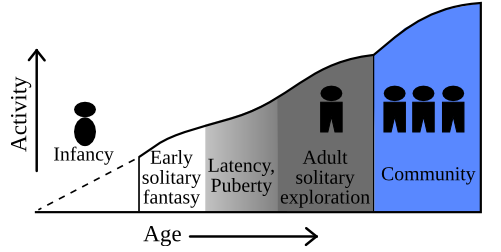
Much can be learned about infantilism and diaper fetishism from the demographics and experiences of the ABDLs. That infantilism and diaper fetishism occur mostly in males suggests a strong biological component (Wilson 1987)[52]. Of course, this would be just a capacity, as specifics like diapers aren't written into the DNA. (While some with infantilism and diaper fetishism are female, male pronouns will be used for brevity.)
Even if an infant had infantilism or diaper fetishism, he might still strive to grow up at first: The baby might not feel the drive to be a baby again, and the desire to be back in diapers might not be felt until out of diapers. (However, if in diapers into childhood, he might notice liking them (Grey 2009a)[26].)
Some trends suggest an importance of infancy or early childhood factors. Arguably, the diaper might become a controllable mother-substitute (Pate 2003)[52] and babyhood a gateway to reclaim affection from the mother (Arndt 1991)[7] (Malitz 1966)[43].
All or almost all ABDLs were raised in diapers (Grey 2009d)[26]. However, their preferred type of diaper wasn't necessarily the type they were raised in. For example, those raised in cloth shortly before disposables became common tended to prefer disposables (Grey 2009d)[26]. This suggests that at least this detail is not generally determined in infancy.
Object relations describes how many babies might bond with a "transitional object", anecdotally a "security blanket," in their first years of life. The baby and this one particular object might be inseparable. Of course, the theory has been over-applied to the point where anything could be declared to be a transitional object(eg (Herdt 1987)[37]). It explains neither the lag in diaper types nor the relative absence of security blanket fetishes. It has also probably led to an over-diagnosis of Borderline Personality Disorder among ABDLs (Grey 2010)[27]: Unlike most, those with Borderline Personality Disorder theoretically haven't completed the transition to a stable sense of self, and so can form bonds with new transitional objects (APA 2000 pp 706-710)[6]. While adult babies might have many beloved stuffed animals, these are not transitional objects in any meaningful sense.
Imprinting is a better-supported explanation. Mate selection is only partially genetic, as experiments with animals have clearly shown: Based on early experiences, a male will seek a future partner who is like the female who raised him, but is neither her nor anyone that he was raised with (Adriaens 2011)[1] (Baumeister 2006)[10] (Wilson 1987)[52]. Evidence for human imprinting is less certain, but one aspect of it has been shown to extend into early childhood (Adriaens 2011)[1]. Imprinting is also a better explanation for much of the "Oedipus Complex," (Bereczkei 2009)[11] Freud's sexological theory, which attributed fetishes to a presumed castration anxiety (Pate 2003)[52]. In the modest Western culture, the maternal association might also include maternal control or nursery objects (Wilson 1987)[52]. Rubber pants were an exception to the lag seen in other diaper combinations (Grey 2009d)[26]: Rubber continues to be present in other nursery items, such as the nipples on soothers and baby bottles. The inexact and displaced nature of imprinting explains both the rarity of infantilism and diaper fetishism, as well as the lag in other diaper types.
The age that ABDLs report first being aware of their desires (the 'reported onset') varies, but there is a peak at age five (Grey 2008)[25]. Many end-of-infancy landmarks occur around this age, such as starting school, "late to potty training" becoming "incontinent," etc.
In this stage, children might start to explore their desires, although possibly only in fantasy. Unintentionally, these fantasies might layer additional details and narratives onto the previously simple desires. These might be influenced by defense mechanisms. For example, distress from not being as mature as the child thinks he should be or from wanting to wear diapers can be escaped by being a baby, arguably an example of reaction formation or regression. (Usually when ABDLs use the word 'regression,' they are referring to a different process. This other regression is similar to an actor intentionally "getting into character" as opposed to merely wearing a costume and reciting lines.) In fantasy, the distress from wanting to wear diapers can be deflected by having another character force the ABDL into them.
Parents might dismiss any curiosity about diapers as merely childish. It is unclear if infantilism or diaper fetishism can be reliably detected at this stage. A safe bet for parents might be to encourage open communication about sex and other intimate topics, to promote an exchange of age-appropriate information.
While ABDLs sharing their backgrounds will often highlight trauma, lenient or harsh parenting, early or late training, etc., there is generally no clear evidence that these caused infantilism or diaper fetishes. They might be just coincidental. Self-reported childhood neglect and abuse is highly prevalent among ABDLs (Fuss et al. 2019)[20]. However, few ABDLs report abuse as the cause of their desires (Grey 2009b)[27].
A possible exception is when diapers, babyhood, or incontinence are involved. Even if not traumatic, the memory of negative experiences might develop into a desire to re-enact them. Per the opponent process theory (Solomon 1980)[54] (Baumeister 1989 pp 104-107)[9], minds self-regulate by various processes that oppose any stimulus. With each recollection, the negative feelings become weaker relative to opponent process, possibly resulting in a positive desire. However, this process might result in more of an addiction than a paraphilia, and very few ABDLs associate their desires with past diaper punishments (Grey 2009b)[27].
Early childhood fantasy might be the youngest stage where ABs and DLs could be differentiated. ABs were more likely than DLs to report being raised in a single-parent female-headed household, a more negative paternal relationship, and have attachment anxiety (Zamboni 2017)[58]. Greater levels of mood disturbance (Hawkinson & Zamboni 2014)[36] and a higher prevalence of childhood neglect and abuse (Fuss et al. 2019)[20] was also observed among ABs, relative to DLs. It is unclear if these contrasts are residual differences from different causes, influences that biased the development of desires from a common cause in different directions, or a mix of both.
The histories of many ABDLs include a lull (Grey 2008)[25] (Malitz 1966)[43], reminiscent of Freud's latency period (Freud 1905)[18]. This might be simply because the ABDL has become aware that others don't share his desires, and that they must be kept secret. It is theorized that this interruption may play a role in the later addictive/compulsive property of paraphilias (Munroe 2001)[49].
Another peak in reported onset is at around twelve years of age (Grey 2008)[25]. Partially, this might be because prior urges and fantasies were forgotten during the increased activity and dramatic changes of puberty. Orgasm and ejaculation, a key part in an adult definition of what is sexual or not, were absent before. Of course, masturbation would be another intimate matter, perhaps confounded with others such as the desire for diapers and/or babyhood.
Among those still in diapers for incontinence or bedwetting, having a first orgasm in diapers sometimes comes up as a cause-and-effect narrative (Grey 2009a)[26]. Additional masturbation in diapers would further eroticize them, per classical conditioning. However, this might merely focus a desire that is already present. That ABDLs became aware of their desires at about the same times whether they were in diapers or not suggests that being in diapers late was not generally the cause of the desires (Grey 2009a)[26]. In general, the evidence for conditioning as the cause of paraphilias is scant (Akins 2004)[2], and it alone can't explain why paraphilias are largely unchangeable in adults. Additionally, while diapers were involved in the early masturbation of many ABDLs (Grey 2013a)[33] (Speaker 1986)[56], conditioning alone doesn't explain the presence of diapers in the first place, given that most ABDLs were already out of them (Grey 2009a)[26].
Lovemaps, like most systems of categorization from sexologists, might be best dismissed as an arbitrary set of labels. Specifically, no explanation is given for why the MoneyismDEF "autonepiophilia" switched in both meaning and lovemap from being a fetish (Money 1984)[45] to not being a fetish (Money 1986)[46].
There was a peak at around twelve years of age for girls too. In addition to the return to wearing absorbent products for menstruation (Grey 2008)[25], 3% of girls would start bedwetting again at twelve (Grey 2009a)[26].
A less visible process of maturing is the reduction in male sexual plasticity (Baumeister 2006)[10]. This is the end of the sensitive period commonly called "impressionable youth". The neural plasticity of childhood makes the mind vulnerable but also repairable. People can develop an interest in diapers and/or babyhood at any age as kinks, but the driving conditions of infantilism and diaper fetishism aren't expected to develop in adults. Most who have one of these conditions were aware of it at sixteen or before (Grey 2008)[25].
With increasing resources and independence, the ABDL may be able to engage in his desires and fantasies more extensively. Additional interests may be acquired and importances can migrate over time, generally becoming more diverse (Grey 2012)[32]. Alternatively, he may continue quitting attempts and binge-purge cycling. An older ABDL may have thought he was alone, a solitary state that might continue for decades (Speaker 1986)[56] (Friday 1980)[50].
For younger ABDLs, specifically those born after the 90's, their experimentation might involve the Internet instead of a physical diaper. They would quickly find out that they weren't alone, yet might not be able to interact with the community until turning 18.
The ABDL community actually predates the Internet, but has become much more accessible and dynamic. It has taken on some properties of a subculture, and has shown clear benefits to the quality of life for ABDLs.
The community includes face-to-face meetings and munchesDEF, as well as online forums and collections of pictures, stories, etc. Some of these pictures and stories may focus on characters the ABDL would like to be with, much like in conventional pornography. However, many of them instead focus on situations the ABDL might like to find himself in, or characters he would wish to be like (Grey 2014)[34].
Because of differing origins and cross-pollination within the community, the games, scenes, fictions, and fantasies of ABDLs are remarkably diverse. Without getting too deep into particulars, it may be helpful to express them along a linear or triangular continuum.
In conversation, ABDLs will usually describe themselves as adult babies, diaper lovers, or somewhere in between. Adult babies and diaper lovers differ in their focus, the involvement of roleplay, and who wears the diapers. The presence and importance of sex also varies, but not as consistently.
Adult Baby, AB
|
Diaper Lover, DL
|
|---|
For every nine ABDLs, there might be roughly one AB, one who is mostly AB, two who are equally AB and DL, three who are mostly DL, and two DLs on average (Grey 2009c)[28]. Of course, ABDLs can change over time: For example, a diaper lover might come to enjoy roleplay as a baby, and an adult baby might decide try simple sex in diapers. Similarly, any particular fantasy or scene will also have a particular emphasis, but this too might transition just as the tone of books or movies can change from beginning to end.
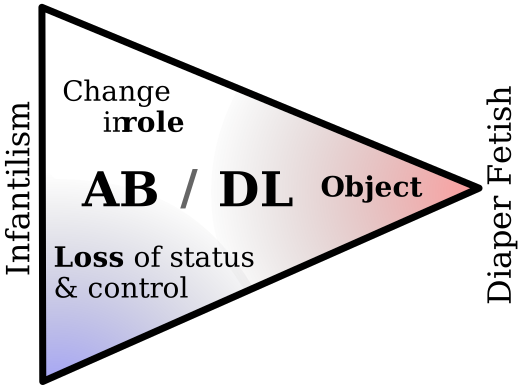
In addition to the AB-to-DL continuum, there is also a range among ABs. One adult baby might enjoy the sense of loss. He might enjoy roleplaying as a man who is aware that he is under the control of a woman. He might be spanked, and displayed in diapers for humiliation. This might also involve typical masochistic elements such as leather, etc.
In contrast, another adult baby might embrace babyhood. While powerless, the baby wouldn't have a sense of loss. As a baby, there would be no humiliation in being in diapers. That adult baby's roleplay would emphasize the change in role. This might not involve any conventional masochism, but still involves surrendering control. Both can be expressed in terms of BDSM.
Of course, the resulting ABDL triangle would be a continuum. Any particular ABDL, scene, fantasy, etc., might be summarized as a point or area on the triangle. The triangle doesn't encapsulate all the details, but can serve to convey some priorities quickly.
Revised 16 June 2024: Expanded to include new sources.
Do you have Questions, tips, suggestions, or other feedback?
![[icon]](figures/puzzle_mag.gif) For More Detail: For More Detail:
|
![[icon]](figures/puzzle_2op.gif) For a Second Opinion: For a Second Opinion:
|
![[icon]](figures/puzzle_ref.gif) Books and Other References:
Books and Other References: